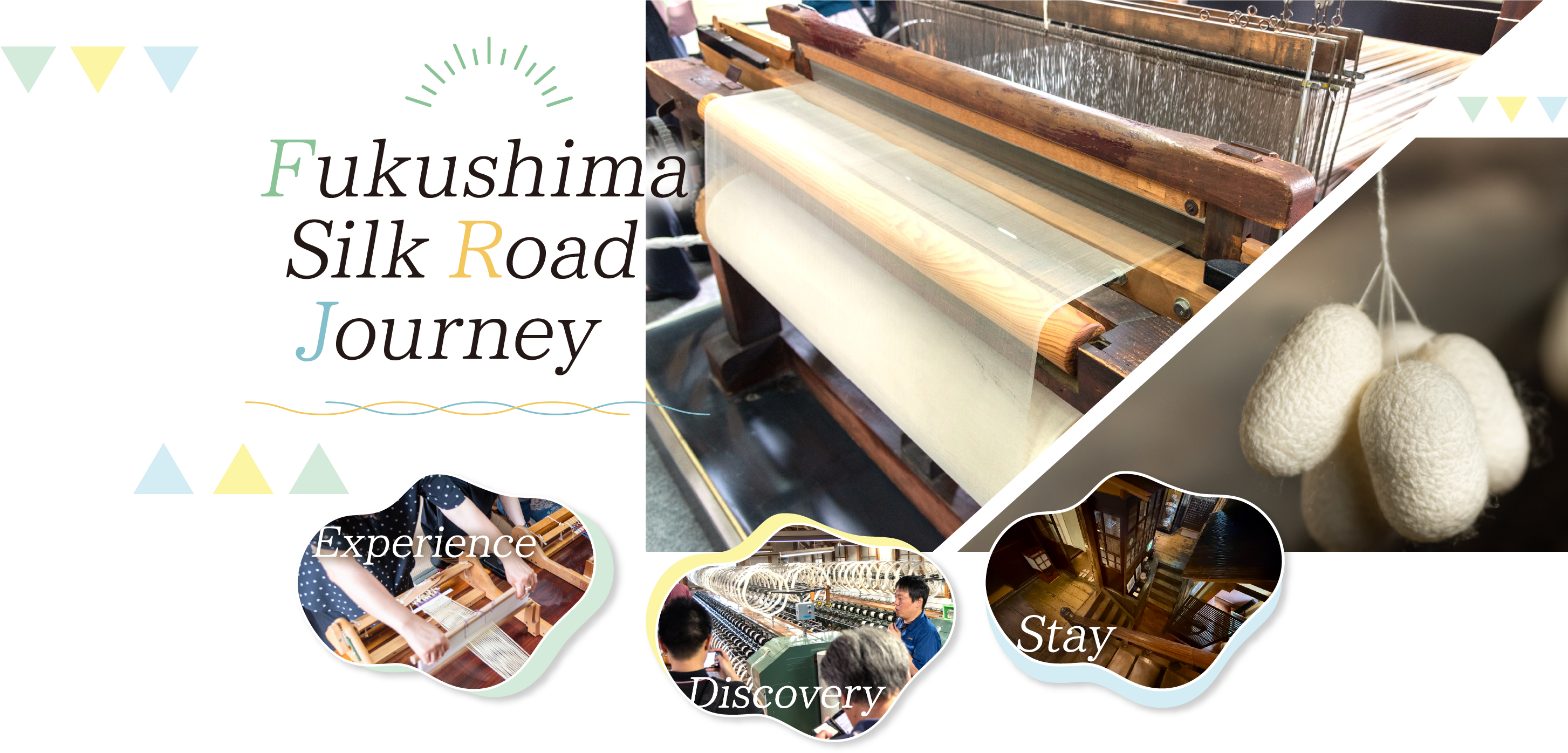
Fukushima Prefecture is an area located in the northeastern part of the Tohoku region of Japan where natural beauty of the for four seasons and traditional culture still live on. Historically rich in sericulture and silk goods, it fascinates visitors with its beautiful scenery, warm local inhabitants, and the handicraft culture that has been passed down through the ages by its artisans. This special tour allows participants to visit Fukushima Prefecture where they can enjoy the rich spirit and unspoiled landscapes of Japan. It also offers a chance to experience the still-thriving traditional sericulture and textile culture of the area and its world-class silk goods crafts.
Participants will have first-hand access to the world of art and beauty handed down through the centuries thanks to interaction with the artisans who handle the world’s thinnest silk goods as well as those handling everything from sericulture to textiles.
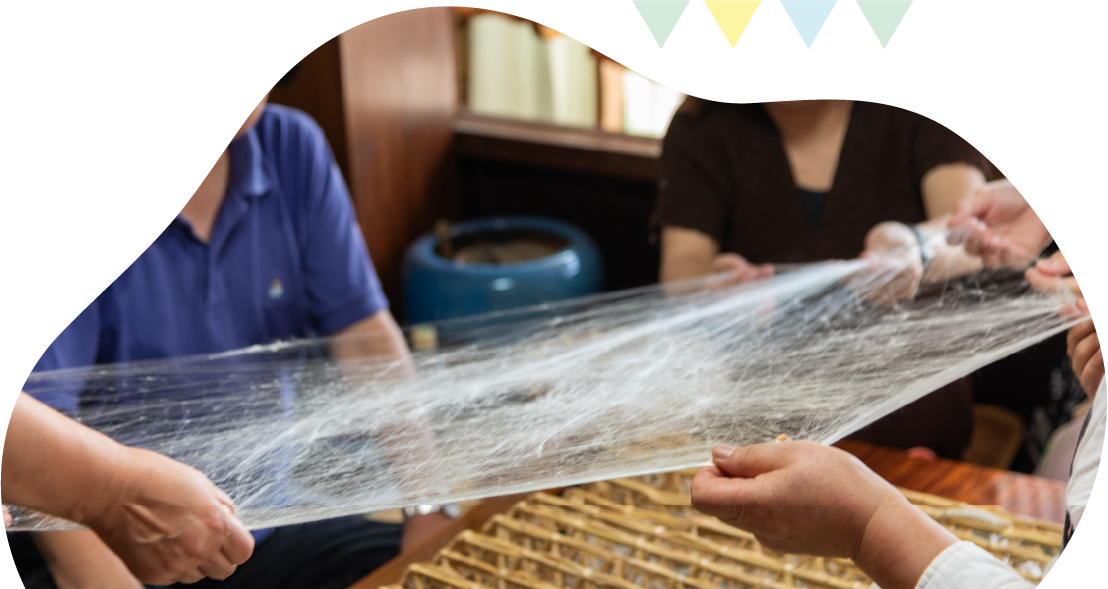
There will also be chances at the workshop for unique experiences such as making silk lotion and silk floss makeup puffs made of silkworm cocoon.
Participants will also visit a local shrine that is deeply connected with sericulture and interact with the history of this area that has developed into a major fruit producers, enjoying the uniting of culture and nature.
This plan is the perfect opportunity for a trip to rediscover the value of Fukushima through history, culture, fashion, and food. Thanks to the presence of licensed guide interpreters, foreign travelers can participate with peace of mind.
In the Fukushima area, the culture of sericulture and silk has come to life, interwoven in the handicrafts of its people and abundant natural beauty for centuries.
These include its pure waters, the superior quality mulberry leaves born from its temperature variation, as well as the techniques of its meticulous artisans.
All this comes together to foster a stronger, more beautiful Fukushima Silk that is world renown.
This spirit of silk making has been passed down through the ages and continues to this day as the pride of the area.
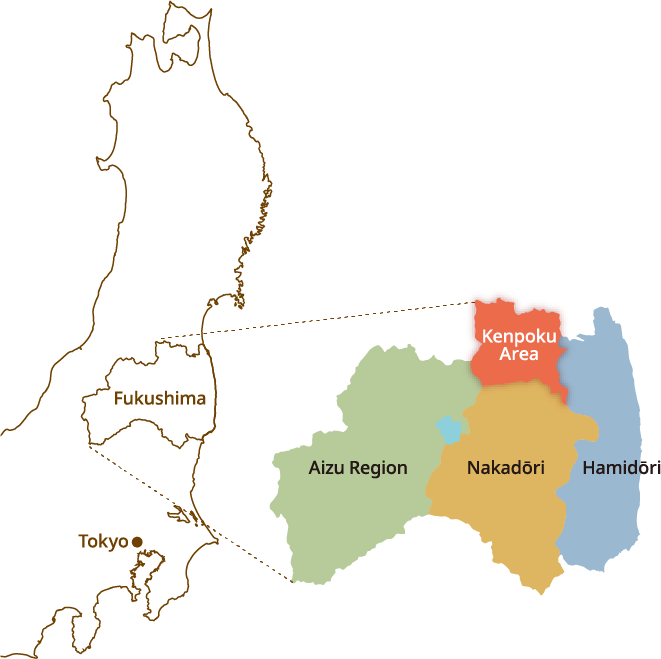
Northern Nakadōri Region of
Fukushima Prefecture —
“Kenpoku Area”
Also known as the
In ancient times, the area combining Shinobu District and Date District was called the “Shintatsu Region.”
It is geographically enclosed by the Abukuma Highlands to the east and the Ōu Mountains to the west, with the Abukuma River flowing through its center.
Is it true that a revolution in sericulture technology happened in Fukushima?
Silk farmers in the Shintatsu region developed a method for temperature control.
In the late Edo period (around 1849, the 2nd year of Kaei), a silk farmer named Zen’emon Nakamura from the Shintatsu region invented the “Silkworm Thermometer“.
By systematizing temperature management—which had previously relied on intuition—he greatly contributed to improving both the efficiency and quality of cocoon production throughout Japan.
Is it true that the Shinshū region was the main center of sericulture?
It was said that the national silk price standards were determined there.
During the Edo period, the Shintatsu region (former Date District) hosted several markets specializing in raw silk, such as the Suwa, Tenno, and Kakeda markets. Among them, the Tenno Market was so influential that it was said to determine silk prices throughout the entire country.
Is it true that the world’s thinnest silk fabric is made in Fukushima?
“Fairy Feather” by Saiei Orimono Co., Ltd.
Kawamata Town in Fukushima has been known since the Meiji era for producing a lightweight silk fabric called karume habutae. “Fairy Feather,” produced by Saiei Orimono Co., Ltd., received the Prime Minister’s Award—the highest honor of the 2012 “Monodzukuri Nippon Grand Award”—as the world’s thinnest silk fabric.
Flourishing sericulture industry
Establishment of the Bank of Japan Fukushima Branch
When the shogunate opened Japan to the world, silk exports rapidly increased.
Merchants and financial businesses from across the country gathered in Fukushima, and in 1899 (the 32nd year of the Meiji era), the first Bank of Japan branch in the Tohoku region was established there.
Fukushima prospered as the central hub of sericulture throughout Tohoku.
We offer three different journeys that tour the silk culture of Fukushima.
These include a trip to connect with history (2 days, 1 night), a trip of healing through hot springs and silk culture (3 days, 2 nights), and a trip of learning and creation (7 days, 6 nights).
Which plan offers the perfect trip for you?
This two-day, one-night trip lets participants interact with the historical culture of sericulture and artisans who handle the world’s thinnest silk goods.
For lodging, they will stay at a long-standing ryokan inn that is nationally registered as a tangible cultural property, providing an experience as if time had stopped.
On the second day, participants will enjoy a chance to make silk lotion and silk floss makeup puffs made of silkworm cocoon, as well as connect with the Neko Shrine and the history of this area that has developed into a fruit producer.
Application Period
Available all year round
*Excluded Days : The first day (departure day) falls on Monday or Wednesday, as well as during the year-end/new year holidays, weekends, and public holidays.
Participation Fees
Price per person
¥180,000 with 2 people, ¥160,000 with 3 people, and ¥140,000 with 4 or more people
What’s Included
Tour guide fee, admission and experience fee, meal cost (3 meals), insurance premium (One night), taxi fare, planning fee
What’s Not Included
Transportation costs to the meeting point, transportation costs not covered in the itinerary, meals and drinks not included in the itinerary, and any other personal expenses.
Plan Details and Itinerary
Day 1)
13:00
Meet at JR Fukushima Sta.
13:40
Staff-guided tour of Kawamata Textile Museum
14:30
Artisan-guided tour and shopping at Saiei Orimono
16:30
Stop for the night at Nakamuraya Ryokan
Day 2)
9:00
Start at Nakamuraya Ryokan
9:15
Interact with staff and hands-on experience at Oriwori Workshop
12:30
Lunch at Kurosawa Japanese Restaurant
13:45
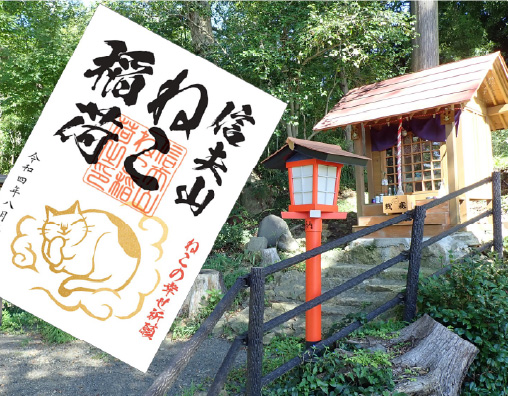
Receive a Neko Shrine stamp
from Nishizaka Neko Inari Shrine
14:45
Seasonal fruit and mushroom picking
15:30
Shopping at Fukushima Roadside Station
16:30
End at JR Fukushima Sta.
Saiei Orimono
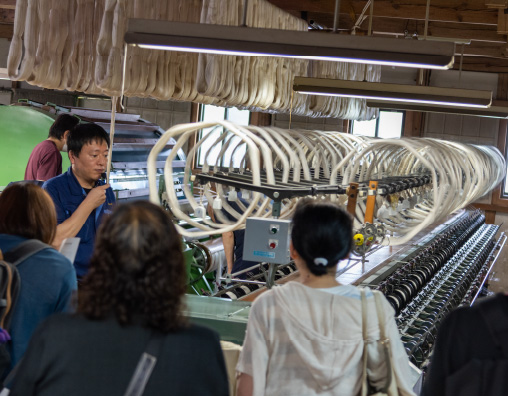
Take a guided tour of the home of Kawamata Silk, which gave birth to the world’s thinnest class of silk good, Fairy Feather.The process from thread making to weaving and inspection is extremely detailed, providing an opportunity to experience delicate handicrafts like the weaving of one thread at a time in a massive weaving warp. The factory operates a wide range of equipment including an automatic loom and a rapier loom, giving you the chance to experience plenty of crafting techniques. Chosen for both Japanese design and craft awards, Fairy Feather has been adopted as an international brand. After the tour, you’ll get a chance for a hands-on experience with products at the model showroom in the same building and even some shopping.
Nakamuraya Ryokan
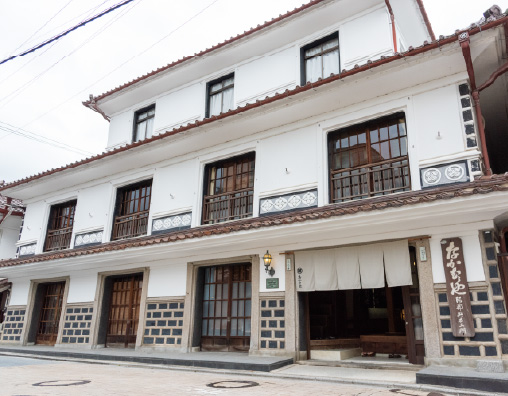
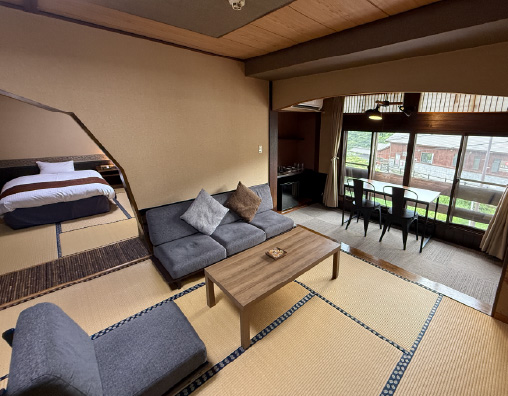
Nakamuraya Ryokan is a mud-wall structure that preserves the warmth of wood. One step through the door and the span of time that ran from the Edo to the Meiji Period will suddenly come alive. With a history that goes back to its establishment in 1688, this lodging facility offers a luxurious experience with space for only three to four groups. The inn still boasts its rare namako walls, keeping alive the beautiful construction of good old Japan. Furthermore, it offers a bath for rent that features hot spring water flowing 100% fresh from the source. Dinner features a traditional kaiseki meal made with seasonal local ingredients, while the morning offers a relaxing meal that includes Iizaka’s famous Radium Egg. This inn offers a special night that brings together modern comforts with memories of times past.
Oriwori Workshop
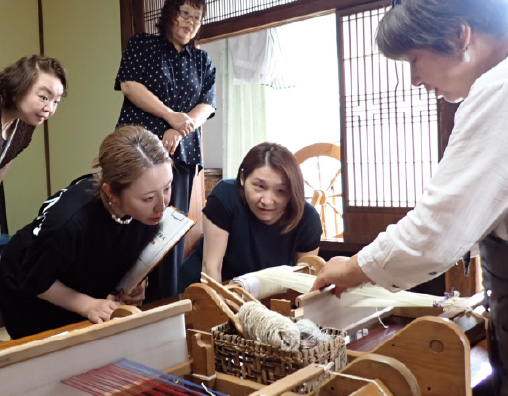
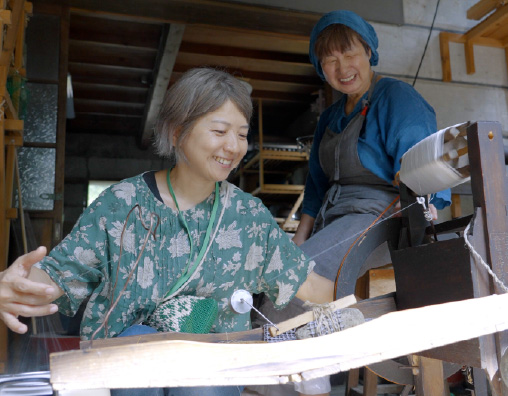
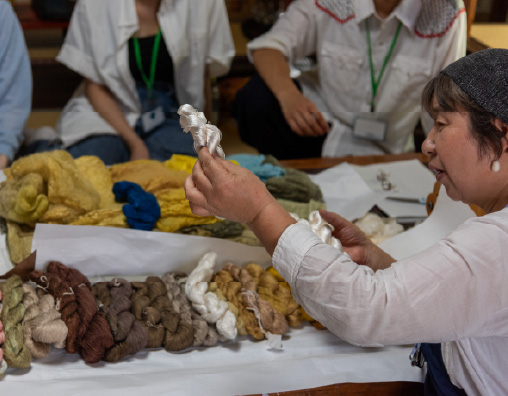
The quiet air of the undeveloped woodlands flows through the old-fashioned house as the clear morning light streams in. Here, you will find a moment to experience how silkworms change life into thread. Oriwori features a wide variety of workshops including fresh face lotion making using the moisturizing ingredient sericin extracted raw cocoons, silk floss making, sericulture work, and dyeing using plants and indigo. All these experiences are held in small groups, offering a relaxed atmosphere where you can learn at your own pace. Your trip will be filled with wonderful memories of this special time where you can experience the entire process from the birth of the silk to when it takes on shape as a fabric, all with your own hands.
Fukushima Shinobuyama Reception Hall:
Kurosawa Japanese Restaurant
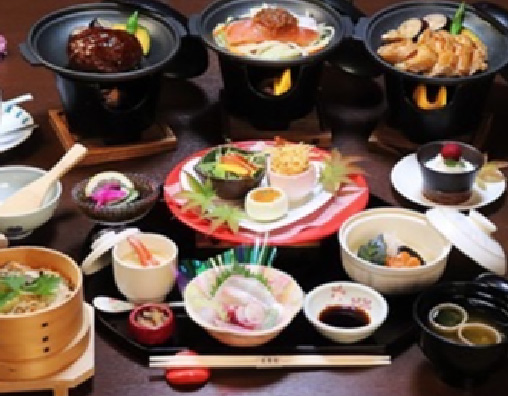
This is a restaurant found at nature-rich Mt. Shinobu in the heart of Fukushima City. The restaurant offers a satisfying lunch experience with heartfelt hospitality and carefully prepared dishes that put the fundamentals of Japanese cuisine first. Enjoy the main dish of your choice: hamburger steak with Japanese beef, miso teriyaki chicken, or white fish grilled with yuzu miso. The meal includes dessert and coffee or tea for a total of 12 items.
Shinobuyama Neko Inari
Neko Inari (Nishizaka Inari) is located in the grounds of the old Japanese-style Nishizakaya at Mt. Shinobu. The foxes in this area are said to be the protector gods of the silkworms. Historically, sericulture was a prosperous business at Mt. Shinobu and rats that ate the silkworms were considered a mortal enemy. Because of this, foxes who chased away the rats earned the faith of the locals as neko inari. At some unknown point in the future this became a shrine for the happiness of cats. They offer a cute shrine stamp of an illustrated cat as a souvenir.
*Inari refers shrines dedicated to Inari no Kami, god of the sun and rice plants (such as Ukanomitama).
Seasonal Fruit Picking and Shopping at Fukushima Roadside Station
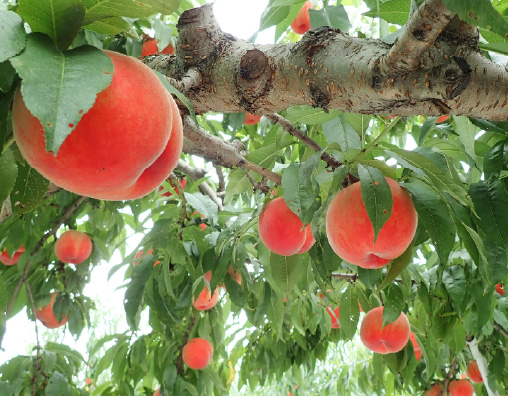
Many of the mulberry fields once used for sericulture have changed to fruit orchards with the decline of the practice, making Fukushima a great place for fruit picking starting with cherries in June on to peaches, grapes, Asian pears, apples, and more. Furthermore, strawberries are in season from December through May, while mushrooms can be picked year round. Fukushima Roadside Station, which opened for business in 2022, offers all kinds of products for sale that represent Fukushima Prefecture including seasonal farm produce, as well as a wide variety of processed goods and souvenirs. Tour participants will receive a discount shopping coupon for use at the farmers’ market. You’ll enjoy a truly unique shopping experience.
This three-day, two-night trip is the perfect opportunity to enjoy the charm of Fukushima in a new way through sericulture and textile culture.
Staying at two long-standing ryokan inns, Iizaka Onsen and Takayu Onsen, participants will get their fill of interacting with artisans, silk-related experiences, a Neko Shrine tour, and a walk through the area’s fruit history.
They will also have a chance to discover the charm of Fukushima at further depth by choosing optional plans on the final day.
Application Period
Available all year round
(Options may vary depending on the season)
*Excluded Days : The first day (departure day) falls on Monday or Wednesday, as well as during the year-end/new year holidays, weekends, and public holidays.
Participation Fees
Price per person
¥300,000 with 2 people, ¥280,000 with 3 people, and ¥260,000 with 4 or more people
What’s Included
Tour guide fee, admission and experience fee, meal cost (6 meals), lodging fee (2 nights), taxi fare, planning fee
What’s Not Included
Transportation costs to the meeting point, transportation costs not covered in the itinerary, meals and drinks not included in the itinerary, and any other personal expenses.
Plan Details and Itinerary
Day 1)
13:00
Meet at JR Fukushima Sta.
13:40
Staff-guided tour of Kawamata Textile Museum
14:30
Artisan-guided tour and shopping at Saiei Orimono
16:30
Stop for the night at Nakamuraya Ryokan
Day 2)
9:00
Start at Nakamuraya Ryokan
9:15
Interact with artisans and hands-on experience at Oriwori Workshop
12:30
Lunch at Kurosawa Japanese Restaurant
13:45
Receive a Neko Shrine stamp
from Nishizaka Neko Inari Shrine
14:45
Season fruit and mushroom picking
15:30
Shopping at Fukushima Roadside Station
16:30
Adachiya Ryokan
Day 3)
9:00
Start at Adachiya Ryokan
9:30
Option 1: Matsuya Local Specialty Shop
11:00
Lunch at Yuzu Sawano-Chaya
12:30
Option 2: Tour of Bansei Tairo
16:00
End at JR Fukushima Sta.
Saiei Orimono
Take a guided tour of the home of Kawamata Silk, which gave birth to the world’s thinnest class of silk good, Fairy Feather.The process from thread making to weaving and inspection is extremely detailed, providing an opportunity to experience delicate handicrafts like the weaving of one thread at a time in a massive weaving warp. The factory operates a wide range of equipment including an automatic loom and a rapier loom, giving you the chance to experience plenty of crafting techniques. Chosen for both Japanese design and craft awards, Fairy Feather has been adopted as an international brand. After the tour, you’ll get a chance for a hands-on experience with products at the model showroom in the same building and even some shopping.
Nakamuraya Ryokan
Nakamuraya Ryokan is a mud-wall structure that preserves the warmth of wood. One step through the door and the span of time that ran from the Edo to the Meiji Period will suddenly come alive. With a history that goes back to its establishment in 1688, this lodging facility offers a luxurious experience with space for only three to four groups. The inn still boasts its rare namako walls, keeping alive the beautiful construction of good old Japan. Furthermore, it offers a bath for rent that features hot spring water flowing 100% fresh from the source. Dinner features a traditional kaiseki meal made with seasonal local ingredients, while the morning offers a relaxing meal that includes Iizaka’s famous Radium Egg. This inn offers a special night that brings together modern comforts with memories of times past.
Oriwori Workshop
The quiet air of the undeveloped woodlands flows through the old-fashioned house as the clear morning light streams in. Here, you will find a moment to experience how silkworms change life into thread. Oriwori features a wide variety of workshops including fresh face lotion making using the moisturizing ingredient sericin extracted raw cocoons, silk floss making, sericulture work, and dyeing using plants and indigo. All these experiences are held in small groups, offering a relaxed atmosphere where you can learn at your own pace. Your trip will be filled with wonderful memories of this special time where you can experience the entire process from the birth of the silk to when it takes on shape as a fabric, all with your own hands.
Adachiya Ryokan
Takayu Onsen stands amidst mountains wrapped in mist. Its milk-white waters that have the scent of sulfur seem to soak directly into the skin. Although Adachiya Ryokan boasts a history of over 400 years, it also has reached the pinnacle of refinement as the perfect hideaway for adults. The spacious open-air bath Taiki-no-Yu comes straight from the source. This peaceful moment of oneness with the water while gazing at the starry sky will bring on a unique relaxation you won’t experience anywhere else. You can also rent out the Yakushi-no-Yu and Himesayuri baths. Enjoy your fill of a soul-healing time in complete privacy.
Matsuya Local Specialty Shop
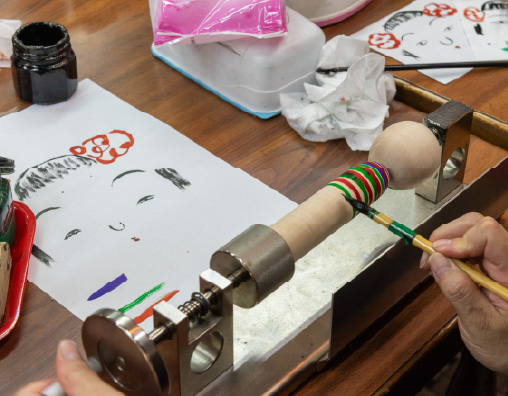
The third hot spring area in the city, Tsuchiyu Onsen is home to the Tsuchiyu kokeshi doll workshop, which is one of the three great kokeshi of Japan. You can view the work of artisans who make these dolls up close at the Matsuya Local Specialty Shop. Afterward, you can try your own hand at making a kokeshi doll. You’ll obtain a natural focus with brush in hand as you learn the characteristics of Tsuchiya kokeshi which include whale-like eyes, arched eyebrows, and a puckered mouth. You can take your creation home with you, making it the perfect way to remember your trip. This is a simple, charming craft experience that is sure to put a smile on the face of all participants.
Bansei Tairo Crystal Dungeon Tour
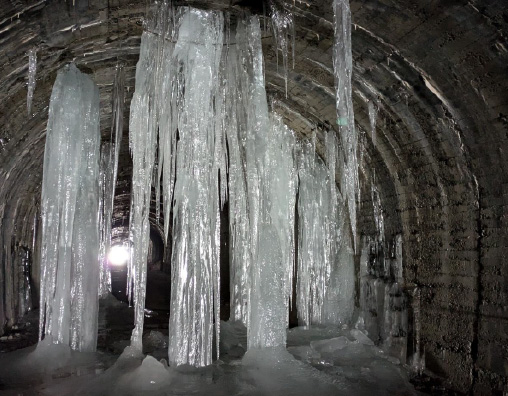
This activity lets you enjoy Fukushima to its fullest in the winter. It is a snowshoe tour to see the icicles that form in the Futatsugoya Tunnel along the old road that joined Fukushima with Yonezawa in Yamagata Prefecture. Expert activity guides will accompany you on the tour, so even beginners can participate if they’re up for some light exercise. You can even come empty-handed as rental equipment is available (snowshoes and overshoes, gloves, separate top and bottom wear, headlamps, etc.). After the tour, you can take a shower at the roadside station (amenity set included) and change clothes before returning.
This seven-day, six-night extended stay program lets participants learn about sericulture and textile culture and crafts directly from instructors while creating a one-of-a-kind silk floss stole.
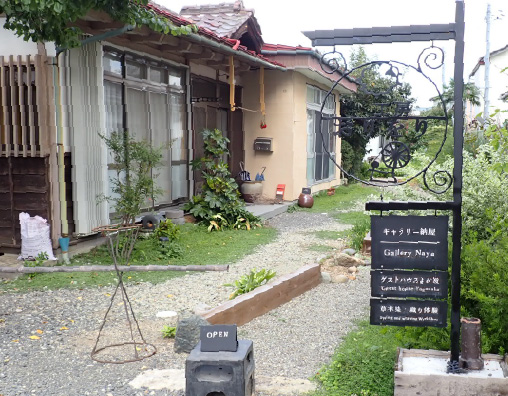
While based at the gallery and a rental guest house that includes a kitchen, they’ll enjoy a chance to mix with the local residents, a vegetable garden experience, and a day spa.
Portable translation devices are also available for rent, overcoming language barriers and helping to build more meaningful connections.
Application Period
Available all year round
*Excluded Days :
Closed during the New Year holidays; may close irregularly
Participation Fees
Price per person
¥188,000 with 2 people, ¥168,000 with 3 people, and ¥148,000 with 4 or more people
Transportation costs to the meeting point, transportation costs not covered in the itinerary, meals and drinks not included in the itinerary, and any other personal expenses.
Plan Details and Itinerary
Day 1)
After 10:00
(may be adjusted as desired)
Gather at Yogasaka Oriwori Workshop
– Explanation of how to use the facility
– Classroom learning
– Various courses
– Retire for the night
*Take meals when appropriate
Days 2–6)
9:00–17:00
Hands-on experience,
interaction with local residents, etc.
Day 7)
9:00
Complete the stole
12:00
Lunch
16:00
(may be adjusted as desired)
End at Yogasaka Oriwori Workshop
Saiei Orimono
Take a guided tour of the home of Kawamata Silk, which gave birth to the world’s thinnest class of silk good, Fairy Feather.The process from thread making to weaving and inspection is extremely detailed, providing an opportunity to experience delicate handicrafts like the weaving of one thread at a time in a massive weaving warp. The factory operates a wide range of equipment including an automatic loom and a rapier loom, giving you the chance to experience plenty of crafting techniques. Chosen for both Japanese design and craft awards, Fairy Feather has been adopted as an international brand. After the tour, you’ll get a chance for a hands-on experience with products at the model showroom in the same building and even some shopping.
Guest House
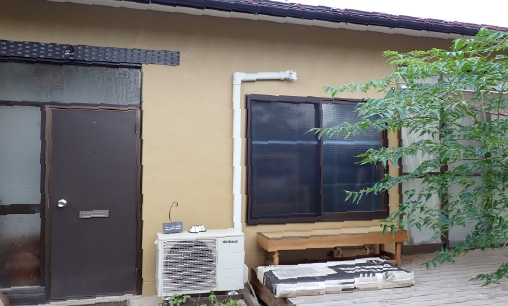
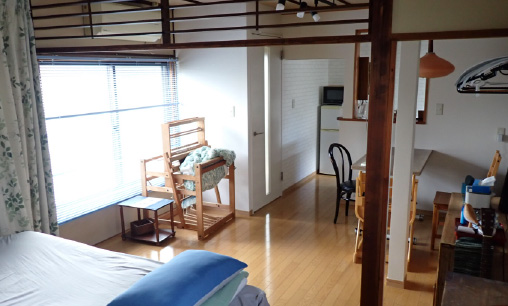
Made from a renovated old-style Japanese house several years ago, the guest house features rooms with a kitchen, toilet with bidet, and two beds. It is for private rental only. Large groups will be directed to separate buildings nearby. The guest house features a refrigerator, microwave, toaster, washer, dryer, towels, bath amenity set, tableware, cookware, and full range of electrical appliances. As there is no bath in the room, guests will be directed to a nearby public bathhouse or ryokan inn day spa. Guests are invited to make free use of vegetables growing in the garden for meals.
Silk Thread & Hand-Spinning Experience
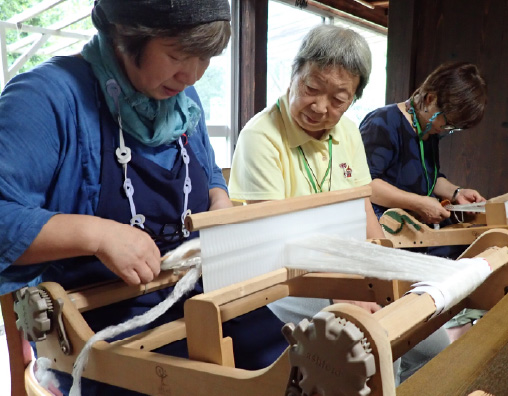
Using tools that are more than a hundred years old, participants spin threads directly from cocoons.
All cocoons used are locally produced, including those from the workshop itself.
You can also try hand-spinning threads from silk floss (mawata).
Plant-Dyed Silk Threads
Experience creating beautifully colored threads using natural materials from the local area.
You can also enjoy hands-on dyeing workshops, including traditional indigo dyeing and other plant-based colors.
Weaving on a Table Loom
Depending on the item you create, you can experience weaving using a compact table loom.
A loom can also be set up in your guest room, allowing you to work at your own pace and enjoy a relaxed creative time.
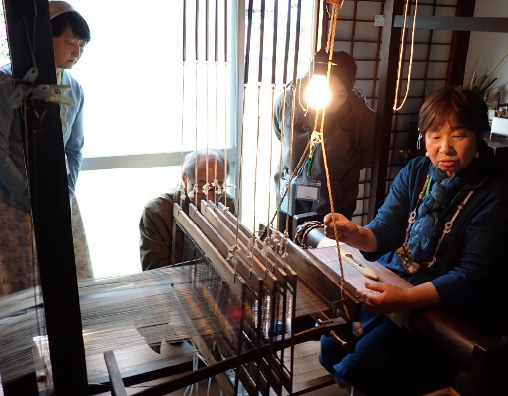
Weaving on a Floor Loom
Create a one-of-a-kind original scarf using traditional tools.
With guidance from an instructor, you can focus fully on your weaving and enjoy a safe, hands-on experience.
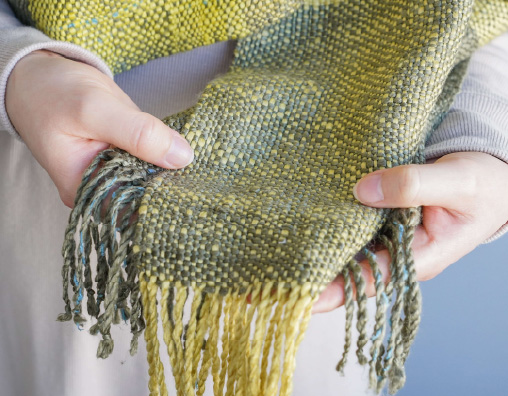
Silk floss stole
This is an original stole made by spinning and weaving silk floss. Participants will create a stole tailored to their experience and preferences while staying in the area and receiving private lessons from instructors who are experts in dying and weaving. Those who wish can begin the experience with dying the silk floss. You’ll bring home a one-of-a-kind souvenir you made all on your own.